 0
0
 0
0
During pregnancy, you’ll need to avoid several key foods: raw or undercooked meats and eggs, unpasteurized dairy products, high-mercury fish like swordfish and king mackerel, deli meats unless heated to steaming, raw sprouts, and unwashed produce. These restrictions protect both you and your baby from harmful bacteria, parasites, and toxins that could cause foodborne illness or developmental issues.
I remember standing in the grocery store at eight weeks pregnant, staring at my favorite soft cheese and feeling completely overwhelmed. Suddenly, foods I’d eaten my entire life felt dangerous. If you’re feeling that same anxiety right now, you’re not alone. The good news? Once you understand the why behind these restrictions, they become much easier to navigate in your daily life.
Most dietary guidelines during pregnancy center on preventing three main risks: bacterial infections like listeria and salmonella, parasitic infections like toxoplasmosis, and excessive mercury exposure that can affect fetal brain development. While the list might seem long at first, you’ll quickly develop new habits that become second nature.
The reality is that pregnancy doesn’t mean you can’t enjoy delicious, satisfying meals. It simply means making informed swaps and taking a few extra precautions. Many moms in our community have shared that learning about these restrictions actually helped them feel more in control of their pregnancy journey, kind of like researching baby name ideas or preparing the nursery.
Let’s break down exactly what you need to know so you can eat confidently and focus on the exciting months ahead.
Foods to Avoid and Why They Matter
Raw and Undercooked Animal Products
Raw and undercooked animal products carry a risk of harmful bacteria like salmonella and listeria, which can cause food poisoning that’s especially dangerous during pregnancy. Your immune system is naturally lowered right now to protect your baby, making you more vulnerable to these infections.
This means saying goodbye (temporarily!) to some dishes you might love:
- Raw or undercooked sushi and sashimi
- Runny or sunny-side-up eggs
- Rare or medium-rare steak and burgers
- Raw oysters, clams, or other shellfish
- Raw cookie dough or cake batter
- Steak tartare or carpaccio
The good news? You can still enjoy all these foods when they’re properly cooked. Fully cooked eggs are nutritious and safe. A well-done burger satisfies that craving just as well. Even sushi lovers have options: cooked rolls with shrimp tempura, California rolls with imitation crab, or vegetable rolls are all fair game. The CDC and food safety experts recommend you avoid raw eggs entirely during pregnancy, but scrambled, hard-boiled, or baked into thoroughly cooked goods, they’re perfectly safe and packed with protein your growing baby needs.
High-Mercury Fish
Mercury is a metal that accumulates in certain fish and can affect your baby’s developing nervous system. The good news? You don’t have to avoid fish entirely, in fact, the omega-3 fatty acids in seafood support your baby’s brain development.
Skip the big predators that accumulate the most mercury: shark, swordfish, king mackerel, tilefish, and bigeye tuna. These aren’t typically everyday fish anyway, so crossing them off your list is pretty painless.
Instead, enjoy safer options twice a week. Salmon, shrimp, pollock, tilapia, cod, and canned light tuna are all low in mercury and packed with nutrients. Wild-caught Alaskan salmon became my pregnancy staple, easy to cook, versatile, and genuinely delicious.
If you’re craving tuna, choose chunk light over albacore (white) tuna, which has higher mercury levels. And if you love sushi, cooked rolls with shrimp or crab are perfectly safe and satisfy that craving without worry.
Unpasteurized Dairy and Soft Cheeses
Unpasteurized dairy products and certain soft cheeses carry a risk of listeria, a bacteria that can cause serious complications during pregnancy. Your immune system is naturally suppressed while pregnant, making you more vulnerable to foodborne illnesses.
The main cheeses to avoid are soft, mold-ripened varieties like brie, camembert, and blue cheese, along with fresh cheeses such as queso fresco, panela, and feta, unless the label specifically says “made with pasteurized milk.” Check every time you shop, because pasteurized versions of these cheeses are perfectly safe to enjoy.
Here’s a simple shopping tip: flip the package over and look for the word “pasteurized” in the ingredient list. Most cheese sold in major grocery stores in the U.S. is pasteurized, but farmer’s markets and specialty shops may carry unpasteurized varieties, so always verify.
The good news? You have plenty of delicious options. Hard cheeses like cheddar, Swiss, and parmesan are safe, as are cottage cheese, cream cheese, mozzarella, and ricotta when pasteurized. I discovered halloumi during my second pregnancy and grilled it constantly. You’re not giving up cheese, just being selective about which types you choose.
Deli Meats and Ready-to-Eat Foods
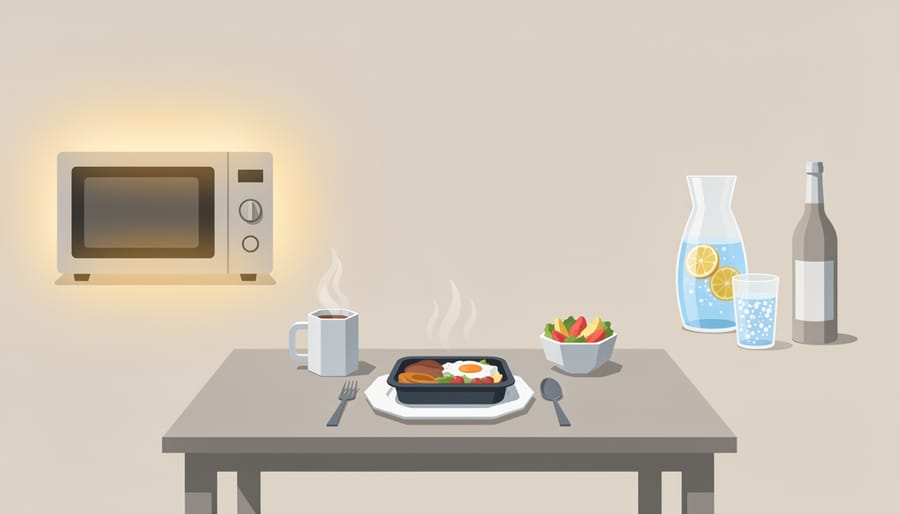
The sandwich craving hits hard, but cold deli meats pose a listeria risk during pregnancy. This bacteria can cross the placenta and harm your baby, even when you feel fine. Deli turkey, ham, salami, hot dogs, and store-bought chicken salad fall into this category.
Here’s the good news: you don’t have to give up that turkey sandwich completely. Heat deli meats until they’re steaming hot, about 165°F, and they’re safe to eat. Yes, it changes the texture slightly, but a warm panini or heated sub satisfies that craving beautifully. Many moms discover they actually prefer grilled deli sandwiches.
Hot dogs need the same treatment. Cook them thoroughly until steaming, not just warm.
For pre-made salads from the deli counter (chicken, egg, tuna, seafood), it’s safest to skip them or make your own at home where you control freshness and storage. I know it’s less convenient, but homemade versions taste better anyway and you can customize them exactly how you want.
Unwashed Produce and Raw Sprouts
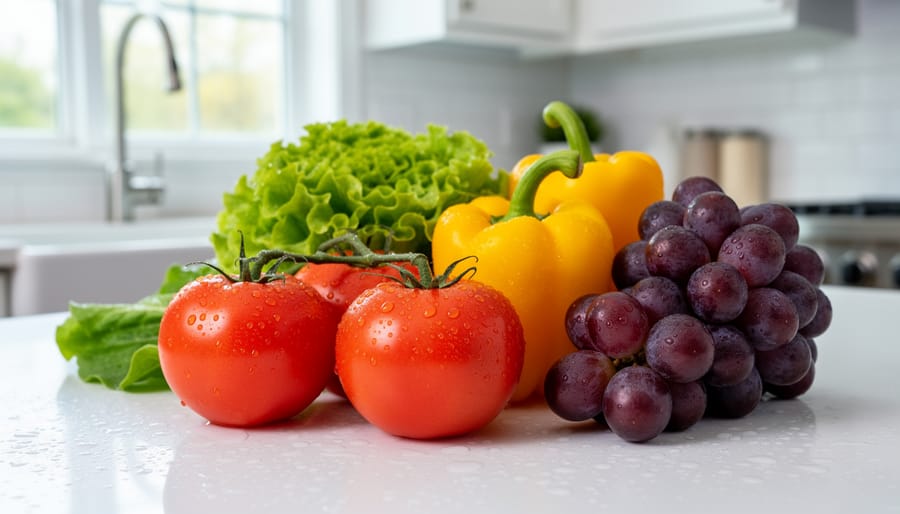
Washing your fruits and vegetables might seem basic, but it’s especially important during pregnancy. Unwashed produce can harbor harmful bacteria like E. coli and parasites such as toxoplasma, which poses real risks to your developing baby. The fix is simple: rinse everything under running water, even items you’ll peel, and use a brush for firmer produce like melons and potatoes.
Raw sprouts deserve special attention. Alfalfa, clover, and mung bean sprouts grow in warm, moist conditions that are perfect breeding grounds for bacteria, and no amount of washing at home fully eliminates the risk. Skip them raw during pregnancy, but cooked sprouts in stir-fries or soups are perfectly safe. This small precaution protects you both without sacrificing the nutrition and color that fresh produce brings to your meals.
Alcohol
The current medical consensus is clear: there’s no known safe amount of alcohol during pregnancy. When you drink, alcohol passes directly to your baby through the placenta, potentially affecting development at any stage.
I know this can feel socially tricky, especially at celebrations or when everyone around you is enjoying a glass of wine. You might miss your favorite cocktail or feel awkward explaining why you’re not drinking. These feelings are completely valid.
The good news? There are so many delicious alternatives now. Sparkling water with fresh berries and mint, virgin mojitos, fancy mocktails at restaurants, they can make you feel festive without the worry. Many moms in our community found that treating themselves to a special non-alcoholic drink made social situations easier and even discovered new favorites they still enjoy postpartum.
Caffeine Limits
You don’t have to give up your daily coffee completely. Current guidelines recommend keeping caffeine under 200mg per day during pregnancy, which is roughly one 12-ounce cup of coffee. That’s enough for most people to maintain their morning ritual without worry.
The key is being aware of hidden caffeine sources throughout your day. An 8-ounce cup of black tea contains about 40-50mg, while green tea has around 25mg. That afternoon chocolate bar? About 25mg. Even a can of cola adds 30-40mg to your daily total.
If you’re a two-cup-a-day person, try switching your second cup to decaf or half-caf. Many moms find that splitting their caffeine intake between coffee and other sources helps them stay comfortably within limits without feeling deprived. Track your intake for a few days to see where you stand, and you’ll likely find room for the treats you enjoy most.
Other Foods to Limit
Beyond the major categories, a few other foods deserve a quick mention. Liver and liver products contain very high levels of vitamin A, which in excess can harm your baby’s development. You don’t need to panic if you’ve had a bite of pâté, but it’s best to skip these foods during pregnancy.
Certain herbal teas sound wholesome but aren’t all pregnancy-safe. While ginger and peppermint tea generally get the green light, others like hibiscus, pennyroyal, and some blends marketed for “detox” should be avoided. When in doubt, check with your healthcare provider or stick to regular tea (keeping caffeine limits in mind).
Finally, be cautious with homemade items containing raw or undercooked eggs, like homemade Caesar dressing, hollandaise sauce, or tiramisu. Store-bought versions typically use pasteurized eggs and are safer choices.
What You Can Eat: Building a Healthy Pregnancy Diet
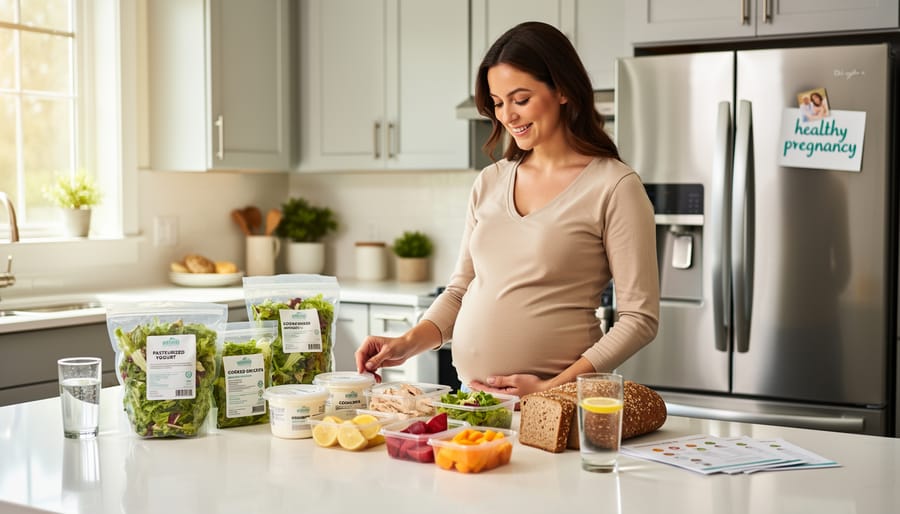
Let’s be honest: after reading about all those foods to avoid, you might be wondering what’s left! The good news? There’s an incredible abundance of delicious, nourishing foods that support your pregnancy and help your baby thrive. When I was pregnant with my first, I discovered a whole world of foods I’d never really explored before, quinoa bowls became my obsession, and I never knew how satisfying a perfectly ripe mango could be until pregnancy cravings led me there.
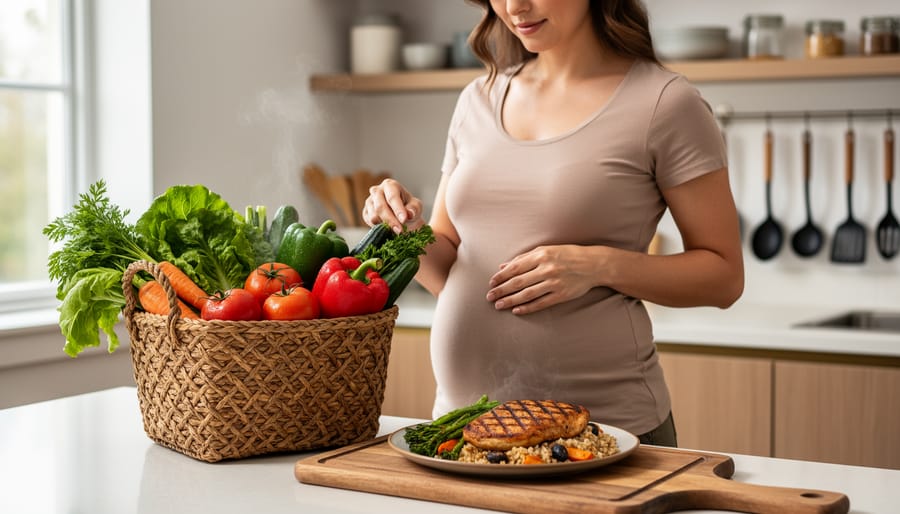
Start with lean proteins like chicken, turkey, well-cooked beef, eggs, and safe fish options such as salmon, sardines, and cod. These provide the building blocks for your baby’s growth and help you maintain your energy. Pair them with whole grains, oats, brown rice, whole wheat bread, quinoa, which offer fiber to help with digestion and sustained energy throughout the day.
Colorful fruits and vegetables aren’t just pretty on your plate; they’re packed with vitamins, minerals, and antioxidants. Dark leafy greens like spinach and kale deliver folate and iron. Berries provide vitamin C and fiber. Sweet potatoes offer beta-carotene. Aim for variety and color, and don’t worry about perfection, even a simple salad or smoothie counts.
Healthy fats are crucial for your baby’s brain development. Avocados, nuts, seeds, olive oil, and fatty fish like salmon provide omega-3 fatty acids, particularly DHA. If you’re not a fish eater, talk to your provider about DHA supplements or plant-based sources like chia seeds and walnuts.
Calcium-rich foods support bone development for your growing baby. Pasteurized milk, yogurt, cheese, fortified plant milks, and even canned salmon with bones are excellent sources. If dairy isn’t your thing, leafy greens and fortified foods can help you meet your needs.
Don’t forget healthy snacks throughout the day, pregnancy hunger is real! Greek yogurt with berries, apple slices with almond butter, hummus with vegetables, or a handful of trail mix can keep your energy steady.
Your prenatal vitamin fills nutritional gaps, but it’s a supplement to good eating, not a replacement. Think of pregnancy nutrition as adding abundance rather than managing restrictions, you’re building a strong foundation for your baby, one nourishing meal at a time.
Navigating Real-Life Situations
Knowing what to avoid is one thing, but navigating real-world situations while pregnant requires a different kind of confidence. Here’s how to handle the scenarios you’ll actually face.
Dining Out Without Stress
Before you go, check the menu online and identify a few safe options. When ordering, don’t hesitate to ask how dishes are prepared. Request that eggs be cooked through, skip the blue cheese on your salad, and ask for deli sandwiches to be heated until steaming. Most restaurants are happy to accommodate pregnancy requests. One mom in our community shared her go-to strategy: “I’d say, ‘I’m pregnant and need to make sure this is cooked well done,’ and every server was incredibly understanding.”
Social Gatherings
Holiday parties and potlucks can feel tricky. Bring a dish you know is safe so you have something to eat. If you’re unsure about a food item, it’s perfectly okay to politely decline or ask the host about ingredients. Many moms mention feeling self-conscious about turning down homemade dishes, but your health comes first. A simple “I’m being extra careful right now” is all the explanation you need.
When Cravings Hit Hard
Craving a turkey sandwich or a soft-serve cone? Many restricted foods have workarounds. Heat that deli meat, choose hard ice cream instead of soft-serve, or find pasteurized versions of your favorite cheese. Getting creative in the kitchen helps too. Some moms find that exploring new recipes and getting involved with cook and craft activities satisfies both pregnancy cravings and the need for safe alternatives.
Traveling While Pregnant
Pack safe snacks like nuts, hard cheeses, crackers, and washed fruit. Research restaurants at your destination ahead of time. Stick to hot, freshly cooked meals when possible, and avoid buffets that may have been sitting at unsafe temperatures. If you’re traveling with kids, involving them in meal planning with kid-friendly ideas can make everyone feel included while keeping your dietary needs front and center.
When to Talk to Your Healthcare Provider
Your pregnancy is unique, and so are your dietary needs. While the general guidelines we’ve covered provide a solid foundation, your individual circumstances matter, and that’s where your healthcare provider becomes your best resource.
Schedule a conversation with your doctor or midwife if you follow a vegetarian or vegan diet, have food allergies, or manage conditions like gestational diabetes or celiac disease. They can help you plan ahead and ensure you’re meeting your nutritional needs while respecting your dietary patterns. This isn’t about fitting into a one-size-fits-all approach, it’s about creating a plan that works for your body and your baby.
Cultural food practices deserve the same thoughtful consideration. If certain traditional foods are important to your family or community, bring them up. Your provider can help you identify which preparations are safe and which might need modifications during pregnancy. You’re not asking permission to honor your culture; you’re building a partnership that respects both your heritage and your baby’s health.
Don’t hesitate to reach out between appointments if you have concerns, accidentally ate something restricted, or feel confused about conflicting information. Your care team is there to support you, not judge you. The best pregnancy nutrition plan is one you can actually follow, and that starts with honest, open communication about what matters to you.
Common Questions About Pregnancy Food Restrictions
Can I really not have any sushi?
You can absolutely enjoy sushi during pregnancy, just stick to rolls made with cooked fish or seafood. California rolls, shrimp tempura rolls, and veggie rolls are all safe options. The concern with raw fish is the potential for parasites and bacteria, but once it’s cooked, you’re good to go. Many pregnant women discover they actually love cooked sushi rolls they’d never tried before.
Is honey safe during pregnancy?
Yes, honey is perfectly safe for you during pregnancy. The concern about botulism from honey only applies to babies under one year old because their digestive systems aren’t fully developed. Your adult digestive system handles honey just fine, so drizzle away on your yogurt or tea.
Can I eat a deli sandwich if I heat the meat?
Absolutely. Heating deli meat until it’s steaming hot kills any potential listeria bacteria, making it safe to eat. This works for sandwiches, hot dogs, and any other deli meats you’re craving. I kept a little toaster oven at work specifically for warming up my turkey sandwiches, it made lunchtime so much easier.
What about just one glass of wine for a special occasion?
Current medical guidance says no amount of alcohol has been proven safe during pregnancy. I know this can feel frustrating, especially at celebrations, but there’s simply no established safe threshold. The good news is that mocktails have gotten really creative, ask your bartender for a special alcohol-free version of your favorite drink, and you won’t feel left out.
I’m vegetarian, how do I get enough protein without meat?
Plant-based proteins work beautifully during pregnancy. Focus on beans, lentils, tofu, tempeh, quinoa, nuts, seeds, and eggs if you eat them. Greek yogurt and cheese (pasteurized, of course) are protein powerhouses too. Your prenatal vitamin covers B12, which is the main nutrient concern for vegetarians. Many moms find that pregnancy actually expands their cooking repertoire with new bean and grain combinations.
How can I tell if cheese is pasteurized?
Check the label, it will explicitly say “pasteurized” if it is. In the United States, most cheeses sold in regular grocery stores are pasteurized, including common brands of feta, mozzarella, and cream cheese. The concern is mainly with artisanal or imported soft cheeses from specialty shops or farmers markets. When in doubt, ask the cheesemonger or skip it. Hard cheeses like cheddar and parmesan are almost always safe because their aging process and low moisture make them inhospitable to listeria.
Navigating pregnancy dietary restrictions can feel overwhelming at first, but here’s something to remember: these guidelines are temporary, and they’re here for one beautiful reason, to protect both you and your growing baby. You’re not giving up favorite foods forever; you’re making mindful choices during this unique season of life.
I’ve found that approaching these restrictions with curiosity rather than anxiety makes all the difference. Yes, you’ll skip the sushi for a few months, but you’ll also discover new favorites along the way. And when you slip up? Give yourself grace. One accidental bite of unpasteurized cheese isn’t a catastrophe, it’s just part of being human.
You’re part of a community of women who’ve navigated these same waters, who’ve felt the same frustrations and found their way through. Reach out when you need support, celebrate the small victories, and trust that you’re doing an amazing job.
Every nutritious meal, every thoughtful choice, every glass of water, it all adds up to nourishing the little life inside you. That’s something worth celebrating, one day at a time.