

 0
0
 0
0
Protecting your baby during the first trimester comes down to five key areas: choosing the right foods, avoiding harmful substances, managing medications safely, reducing infection risks, and knowing when to call your doctor. These early weeks lay the foundation for your baby’s development, and small, thoughtful changes to your daily routine can make a real difference.
I remember the mix of excitement and worry that came with seeing those two pink lines. Suddenly, every decision felt monumental. Should I skip my morning coffee? Was my usual workout too intense? Could I still clean the cat’s litter box? If you’re feeling overwhelmed by conflicting advice from well-meaning friends and late-night internet searches, you’re not alone.
The good news is that keeping yourself and your baby safe doesn’t require perfection or constant anxiety. Most of what you need to know falls into straightforward, manageable categories. Your body is already working incredibly hard to nurture your growing baby, and with a few practical adjustments, you can support that process with confidence.
This guide walks you through the essential safety steps that matter most right now. We’ve gathered evidence-based recommendations alongside real experiences from moms who’ve been exactly where you are. You’ll find clear answers to common worries, from which foods to avoid to how much rest you actually need, all presented in a way that reduces stress rather than adding to it. Let’s focus on what truly keeps you and your baby healthy during these precious early weeks.
How We Chose These Safety Tips
We didn’t just compile a random list of dos and don’ts. These early pregnancy safety tips came from three trusted sources: current medical guidelines from organizations like ACOG, real experiences shared by moms in our Mommy’s Nest community, and the questions we hear most often from first-time expecting mothers. Each tip has solid evidence behind it, but we’ve filtered that medical guidance through the lens of what actually works in daily life.
We know there’s a difference between what a textbook says and what you can realistically manage when you’re exhausted, nauseous, or just trying to get through your workday. That’s why we’ve included real stories and practical workarounds alongside the medical facts, so you get the full picture of how to keep yourself and your baby safe during these crucial early weeks.
1. Schedule Your First Prenatal Appointment Early
One of the most important steps you can take when you discover you’re pregnant is scheduling your first prenatal appointment, ideally around the 8-week mark. This visit isn’t just a formality, it’s the foundation of your entire pregnancy journey. Your healthcare provider will confirm your pregnancy, calculate your due date, and run initial blood work to check your overall health, blood type, and immunity to certain infections.
During that first appointment, expect a thorough conversation about your medical history, any medications you’re taking, and lifestyle habits. Your provider will likely discuss the importance of an organic prenatal supplement and other nutritional needs. They’ll also establish baseline measurements like your weight and blood pressure that will be tracked throughout your pregnancy.
Sarah, a mom from our community, shared that her first appointment felt overwhelming but incredibly reassuring: “I had so many questions written down, and my doctor took time with each one. Just hearing the heartbeat made everything real and helped me feel confident about the journey ahead.”
Don’t wait too long to schedule, many providers book out several weeks in advance, and early care helps catch potential concerns when they’re most manageable.
2. Start Taking Prenatal Vitamins with Folic Acid
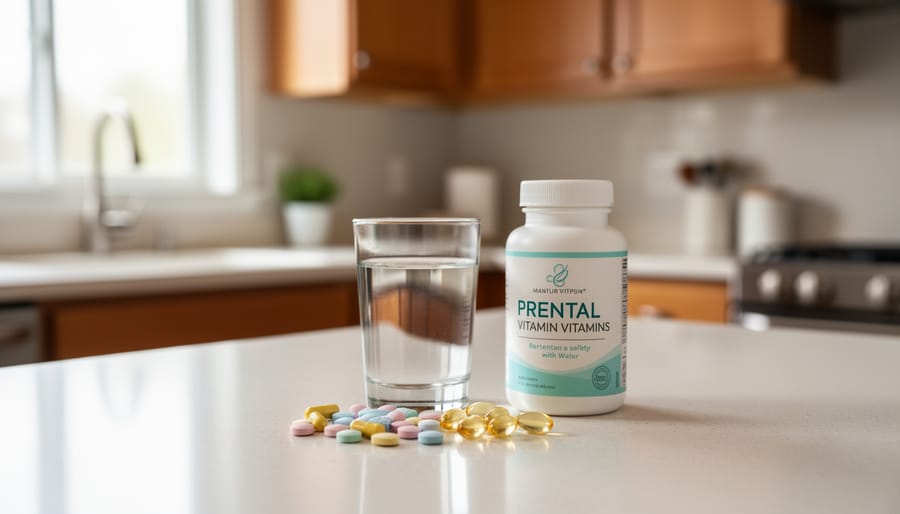
One of the most important things you can do for your baby’s development is to start taking a prenatal vitamin that contains folic acid. This B vitamin plays a crucial role in preventing neural tube defects, which affect the baby’s brain and spine, and these structures begin forming incredibly early, often before you even realize you’re pregnant. That’s why doctors recommend starting prenatal vitamins when you’re trying to conceive, but if you’ve just found out you’re expecting, start taking them right away.
Now, here’s something many moms don’t talk about enough: taking prenatal vitamins when you’re dealing with morning sickness can feel impossible. If you’re struggling to keep them down, try taking your vitamin with a small snack before bed instead of on an empty stomach in the morning. Some moms find that gummy prenatals are easier to tolerate, though check that they contain adequate folic acid since some formulations have lower amounts. You can also split the dose if your vitamin allows it, or ask your doctor about liquid options.
Beyond prenatal vitamins, certain foods to avoid during pregnancy can impact your nutrition, so pairing good supplementation with safe eating habits gives your baby the best start possible.
3. Avoid Harmful Substances: Alcohol, Smoking, and Certain Medications
When you discover you’re pregnant, one of the most important steps you can take is eliminating substances that could affect your baby’s development. No amount of alcohol is considered safe during pregnancy, especially in these crucial early weeks when your baby’s organs are forming. The same goes for smoking and recreational drugs, which can increase risks of complications and developmental issues.
If you’re currently taking any prescription medications, don’t stop them without talking to your doctor first. Some medications need to be adjusted or switched to safer alternatives, while others are perfectly fine to continue. Your healthcare provider can help you weigh the benefits and risks for your specific situation.
Over-the-counter medications deserve attention too. That ibuprofen you usually reach for when you have a headache? It’s best avoided during pregnancy, especially in the first and third trimesters. Acetaminophen is generally considered safer, but always check with your provider before taking anything, even supplements or herbal remedies.
Making these changes isn’t always easy, particularly if you’re dealing with morning sickness or stress. Be gentle with yourself. What matters is making these adjustments now that you know, and reaching out for support if you need help. Your doctor can connect you with resources if you’re struggling with any substance use.
4. Be Mindful of Food Safety and What to Eat
Your body is working overtime to grow your baby, and what you eat matters more than ever right now. While it might feel overwhelming to navigate all the food rules, think of this as protecting your little one during their most vulnerable development stage.
Foods to avoid during early pregnancy include raw or undercooked seafood (sorry, sushi rolls), deli meats and hot dogs unless heated until steaming, unpasteurized cheeses like brie or feta, and high-mercury fish such as swordfish and king mackerel. These carry risks of harmful bacteria or excessive mercury that can affect your baby’s development. Raw or undercooked eggs and unwashed produce should also stay off your plate for now.
Here’s a quick reference for smart swaps:
- Skip raw sushi, choose cooked rolls or vegetarian options
- Heat deli meats until steaming, or opt for freshly cooked chicken or turkey
- Choose pasteurized cheeses, check labels on soft varieties
- Pick low-mercury fish like salmon, cod, or tilapia instead of tuna steaks
- Cook eggs until yolks are firm, avoid homemade Caesar dressing or cookie dough
Now for the good news: focus on what you can enjoy. Colorful fruits and vegetables, whole grains, lean proteins, and calcium-rich foods nourish both you and your growing baby. One mom in our community shared that when pregnancy cravings hit hard, she found creative ways to satisfy them safely, like making her own ice cream with pasteurized ingredients or enjoying cooked California rolls when she desperately wanted sushi. Your cravings are real, and with a little creativity, you can honor them while keeping your baby safe.
5. Stay Hydrated and Rest When Your Body Needs It
Your body is working overtime right now, building a placenta and growing a tiny human from scratch. That incredible work requires two simple but powerful things: water and rest.
Aim for eight to ten glasses of water daily, though you might need more if you’re dealing with morning sickness or living in a warm climate. Keep a water bottle within reach throughout the day and sip consistently rather than chugging large amounts at once. Proper hydration supports increased blood volume, helps prevent constipation, and can even ease some pregnancy symptoms like headaches and dizziness.
The exhaustion you’re feeling is real and completely normal. Your progesterone levels are soaring, which naturally makes you feel sleepy. Don’t fight it. If you need to crawl into bed at 8 PM or take a weekend nap, do it without guilt. Your body is literally creating life, which is more demanding than running a marathon.
One mom in our community shared that she started setting phone reminders to drink water and gave herself permission to say no to evening plans when she was tired. Those small acts of self-care made her first trimester so much more manageable. Listen to what your body is telling you and honor those needs.
6. Limit Caffeine Intake

I was a three-cups-a-day coffee person before I got pregnant, so when my doctor mentioned the 200mg caffeine limit, I panicked a little. But cutting back turned out to be easier than I expected, and honestly, I felt better for it.
Current guidelines recommend limiting caffeine to about 200 milligrams daily during pregnancy, that’s roughly one 12-ounce cup of coffee. Why? High caffeine intake has been linked to increased miscarriage risk and low birth weight. Your body also processes caffeine more slowly during pregnancy, and it crosses the placenta to your baby.
Here’s what surprised me: caffeine hides everywhere. That 12-ounce latte at your favorite café? Probably 150mg right there. Add an afternoon black tea (40-70mg), a piece of dark chocolate (20mg), and you’ve sailed past your limit without realizing it.
I made the switch gradually, mixing regular and decaf coffee for a week before going fully decaf. Some mornings I’d have half-caff just to ease the transition. Herbal teas became my new best friend, especially fruity ones that felt special rather than medicinal.
The headaches lasted about three days, but then I started sleeping better and my nausea actually improved. If you’re struggling, remember that this limit is temporary. Your morning ritual can still exist; it just looks a little different for now.
7. Avoid Hot Tubs, Saunas, and Overheating
That relaxing soak in the hot tub might need to wait. During early pregnancy, activities that significantly raise your core body temperature can pose risks to your developing baby, particularly in the first trimester when major organs are forming.
Hot tubs, saunas, and steam rooms can quickly elevate your body temperature above the safe threshold. Most experts recommend avoiding activities that raise your core temperature above 101°F (38.3°C). The concern is that excessive heat during those critical early weeks may affect neural tube development.
This means you’ll want to skip the sauna after your workout and pass on that hot tub invitation. Intense hot yoga classes where the room is heated to extreme temperatures should also be modified or postponed until after pregnancy.
Here’s the good news: warm baths are typically perfectly safe. The key difference is that bath water cools down naturally, and your upper body usually stays exposed to air, preventing your core temperature from spiking the way it would in a hot tub.
For relaxation, try a comfortably warm bath, prenatal massage, gentle stretching, or meditation. You can still unwind and pamper yourself, just keep things at a moderate temperature. If you’re sweating profusely or feeling overheated during any activity, it’s time to cool down.
8. Practice Safe Exercise and Movement
Finding out you’re pregnant doesn’t mean you have to put your active lifestyle on hold. In fact, staying active during early pregnancy can boost your energy, improve your mood, and help prepare your body for the months ahead. The key is making smart modifications and listening to what your body tells you.
Generally safe activities include walking, swimming, prenatal yoga, and stationary cycling. These low-impact exercises keep you moving without putting you or your baby at risk. If you were already active before pregnancy, you can often continue your routine with adjustments. However, now’s not the time to train for your first marathon or push for personal bests.
Activities to avoid include contact sports like soccer or basketball, anything with a high risk of falling (like skiing or horseback riding), and exercises that involve lying flat on your back after the first trimester. Scuba diving is also off-limits due to pressure changes.
Sarah from our community shared how she adapted her CrossFit routine: “I swapped box jumps for step-ups and reduced my weights. My coach helped me modify everything, and I felt so much better staying active rather than stopping completely.”
Always check with your healthcare provider before starting or continuing any exercise program. They know your specific situation and can give you personalized guidance. If something feels off, stop and rest.
9. Be Cautious with Cleaning Products and Chemicals
That nesting urge might have you eyeing every corner of your home with plans for a deep clean, but early pregnancy is the time to rethink what you’re cleaning with. Strong chemical fumes from oven cleaners, bleach, ammonia-based products, and certain disinfectants can be overwhelming and potentially risky during your first trimester when baby’s organs are developing.
You don’t need to live in a dirty house, but switching to gentler alternatives makes sense right now. Vinegar and baking soda handle most cleaning jobs surprisingly well. If you need stronger products, choose fragrance-free or plant-based options when possible, and always open windows to create good airflow. Wear gloves to reduce skin contact, and if a product makes you feel dizzy or nauseated, step away and let someone else finish the job.
Paint fumes deserve extra caution too. If you’re planning nursery updates, opt for low-VOC or zero-VOC paints, keep the room well-ventilated, and honestly, this is a perfect task to delegate to your partner or a friend.
Garden pesticides, harsh drain cleaners, and aerosol sprays? Save those for after baby arrives, or hand them off to someone else. Your instinct to create a safe, clean space is beautiful, just make sure you’re keeping yourself safe while doing it.
10. Know When to Call Your Healthcare Provider

Your instincts matter, and knowing when to reach out to your healthcare provider can bring peace of mind during these early weeks. While some discomfort is normal as your body adjusts, certain symptoms need prompt medical attention.
It’s also worth contacting your doctor if you notice any bleeding accompanied by cramping, have concerns about decreased pregnancy symptoms suddenly disappearing, or experience burning during urination, which could signal an infection. Remember that morning sickness, mild cramping, light spotting, and fatigue are typically normal first-trimester experiences, but you’re the expert on your own body.
One mom from our community shared that she called her provider three times in her first trimester with questions, and each time they reassured her that it’s always better to check. Healthcare providers expect calls from newly pregnant moms and would much rather you reach out than worry alone. Whether you need clarification on dietary restrictions want help to choose the right prenatal or need guidance on safe food swaps don’t hesitate to ask. Trust yourself, and never feel like you’re bothering anyone by seeking reassurance about your pregnancy.
Your Early Pregnancy Questions Answered
Can I dye my hair during early pregnancy?
Most experts consider hair dye safe after the first trimester, though some moms choose to wait or opt for highlights that don’t touch the scalp. If you’re concerned, semi-permanent or ammonia-free dyes are gentler alternatives, and making sure the room is well-ventilated helps minimize any fume exposure.
Is it safe to travel in my first trimester?
Travel is generally fine in early pregnancy if you’re feeling well, though many moms find fatigue and morning sickness make it less enjoyable. Stay hydrated, move around regularly on long trips, and keep your prenatal records handy just in case.
What should I do about my cat’s litter box?
Ask someone else to handle litter box duty if possible, as cat feces can carry toxoplasmosis, which is harmful during pregnancy. If you must do it yourself, wear gloves, wash your hands thoroughly afterward, and change the litter daily since the parasite takes a day or more to become infectious.
How can I handle morning sickness safely?
Small, frequent meals and keeping crackers by your bedside can help, along with ginger tea or preggie pops that many moms in our community swear by. If you’re struggling to keep anything down or losing weight, call your healthcare provider, as they can prescribe safe medications or check for dehydration.
Can I still have sex during early pregnancy?
Yes, sex is safe for most healthy pregnancies unless your doctor has specifically advised otherwise due to complications like bleeding or placenta issues. Your baby is well-protected in the amniotic sac, so there’s no need to worry about causing harm through normal intimacy.
These questions come up constantly in our Mommy’s Nest community, and it’s completely natural to second-guess everyday activities once you see those two pink lines. Remember that your healthcare provider knows your specific situation best, so never hesitate to bring up anything that’s on your mind, no matter how small it seems.
Navigating early pregnancy can feel overwhelming, but you’re doing an amazing job just by seeking out this information. These safety tips aren’t meant to add stress, they’re here to help you build a strong, healthy foundation for your baby’s journey. Remember, you know your body better than anyone, and it’s perfectly okay to trust your instincts when something feels off.
Every pregnancy is beautifully unique, and what works for one mom might look different for another. That’s completely normal. Your healthcare provider is your partner in this experience, so never hesitate to reach out with questions, no matter how small they might seem.
You’re not alone on this journey. The Mommy’s Nest community is filled with moms who’ve been exactly where you are now, and we’d love to hear your story. What safety tip surprised you most? What questions are still on your mind? Share your experiences in the comments below, your insight might be exactly what another expecting mom needs to hear today.