
 0
0
 0
0
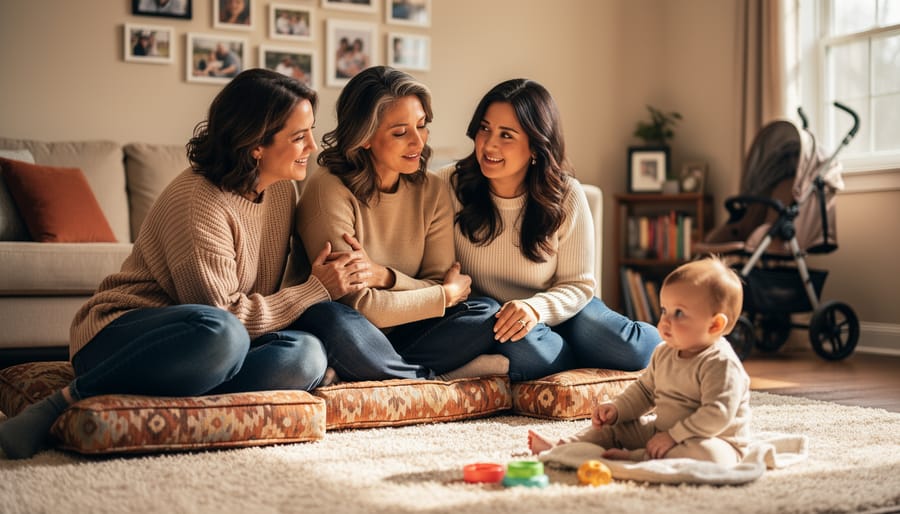
Community moms are the women who show up for you and your children outside your biological family circle. They’re the neighbors who text when they notice your toddler’s shoe left on the sidewalk, the fellow parents who grab your grocery cart when your baby has a meltdown in aisle three, and the friends who understand why you need to talk about sleep schedules at 10 p.m. on a Saturday. These relationships matter because motherhood wasn’t designed to happen in isolation, and the village we all hear about doesn’t just appear. It has to be found, built, and nurtured.
The concept isn’t new, but it’s become more intentional in recent years as traditional support systems have shifted. Many of us live far from our own mothers, sisters, and childhood friends. Work schedules are unpredictable. Extended family gatherings happen twice a year instead of twice a week. What fills that gap is often a patchwork of women we meet at the playground, through school drop-off lines, in online forums, or at community events.
I remember the first time another mom offered to watch my daughter so I could sleep through a migraine. We’d only known each other a few weeks, but she saw me struggling and stepped in without hesitation. That moment taught me what community really looks like in practice.
Finding and becoming a community mom isn’t complicated, but it does require openness and a willingness to both ask for help and offer it. The women who surround you can become your lifeline, your sounding board, and your reminder that you’re doing better than you think.
What Makes a Community Mom
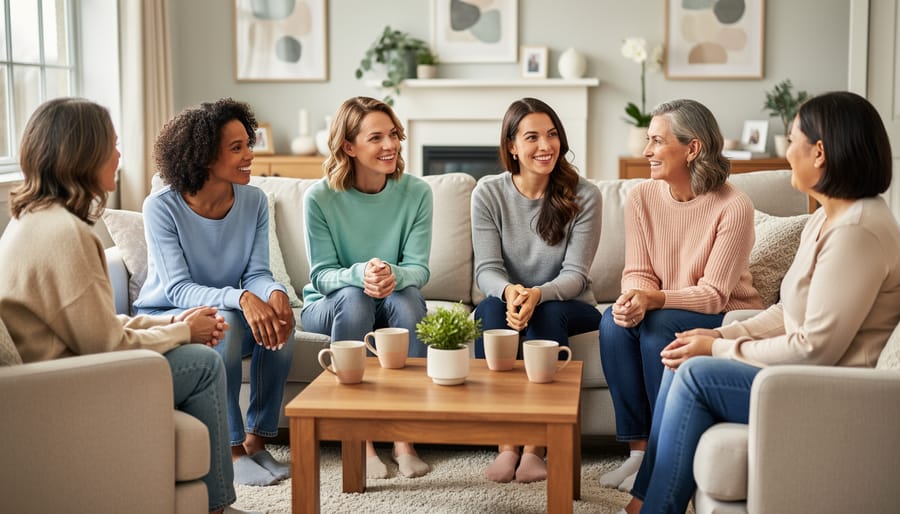
A community mom isn’t necessarily the friend you’ve known longest or the one who lives closest. She’s the person who texts you at 10 p.m. to ask how your day really went, who admits her toddler ate crackers off the floor too, and who doesn’t flinch when you cry over something that seems small but feels enormous.
These relationships have a distinct quality that sets them apart. Unlike traditional friendships built on shared hobbies or history, community mom connections form around the raw, immediate reality of raising children. There’s less performance, more truth. You don’t need matching parenting philosophies or perfectly aligned schedules, what matters is showing up for each other in the mess of it all.
What makes someone a community mom? The specifics look different for everyone, but certain qualities show up again and again:
- She listens without offering unsolicited advice or trying to fix everything
- She shares her own struggles honestly, not just her highlight reel
- She celebrates your small wins like they’re major victories
- She normalizes the hard parts instead of making you feel alone in them
- She shows up during tough times, even when it’s inconvenient
- She shares resources freely, from hand-me-downs to babysitting swaps
- She validates your feelings without judgment about your choices
The beauty of these relationships is their reciprocity. You’re not calling on someone to save you; you’re both navigating motherhood together, taking turns holding each other up. Some days you’re the one offering reassurance. Other days you’re the one who needs to hear “you’re doing better than you think.”
This mutual support creates a safety net that traditional friendships sometimes can’t provide. Your college roommate might love you deeply but not understand why you’re exhausted after a day at home with a baby. A community mom gets it without explanation. That shared understanding, rooted in the specific challenges and joys of motherhood, is what transforms a good friendship into something essential.
Why Every Mother Needs Her Community Moms
The first time you feel completely unseen in a room full of people is often when you’re holding a newborn. You’re physically present, but your mind is spinning through feeding schedules, sleep deprivation, and the quiet panic of wondering if you’re doing any of this right. That’s when a community mom changes everything.
These relationships aren’t just nice to have, they’re essential scaffolding for your mental health. Research confirms what mothers have known instinctively: social support lowers PPD risk significantly. When someone texts to check in after a rough night, or drops off dinner without needing to be asked, they’re doing more than being kind. They’re buffering you against the isolation that makes postpartum so hard.
Community moms help carry the mental load that otherwise lives solely in your head. They remember that your daughter hates peas, offer to grab diapers when they’re at the store, or watch your toddler so you can shower. These aren’t grand gestures, they’re the tiny acts of noticing that make you feel less alone in the daily grind.
Just as importantly, they normalize what you’re feeling. When you admit you cried over spilled milk (literally), and she says “I sobbed yesterday because my shirt was on backwards all morning,” suddenly your emotions don’t feel so outsized. You realize that struggling doesn’t mean failing.
For many mothers in 2026, extended family lives states away or isn’t available for complicated reasons. Your parents might still be working full-time. Your sister might be childless and unsure how to help. Community moms fill that village gap, not as replacements, but as the people who understand this exact season because they’re in it or recently were.
They remind you to take your organic prenatal supplement when you’re nursing and running on fumes. They celebrate when your baby sleeps three hours straight. They sit with you in the mess and make it feel less heavy simply by being there.
Where to Find Your Community Moms in 2026
Online Spaces That Feel Like Home
You don’t need to change out of your pajamas or find childcare to connect with other mothers anymore. Online spaces have become genuine lifelines for moms craving community, especially during nap times, midnight feeds, or those early morning hours when you’re the only one awake.
Start by exploring platforms built specifically for mothers. Mommy’s Nest hosts forums where you can ask anything from early pregnancy safety questions to toddler tantrum strategies without judgment. Peanut works like a friendship dating app, matching you with local moms who share similar interests and parenting approaches. The Bump and What to Expect communities connect thousands of mothers by due date, creating bonds with women navigating the exact same developmental stage as you.
Facebook groups can be hit or miss, but the right ones feel like having friends in your pocket. Search for groups focused on your specific needs: cloth diapering, working moms in your city, raising multiples, or parenting with chronic illness. Smaller, well-moderated groups typically foster deeper connections than massive ones where your questions get lost in the scroll.
The key is finding your people. If a space makes you feel worse about your parenting, leave. You’re looking for communities where women cheer each other on, share resources freely, and respond with “I’ve been there” instead of unsolicited advice. When you find that space, participate. Comment on posts, share your own experiences, and watch those digital connections become real friendships.
Real-Life Connection Points

The local library’s Tuesday morning story time might feel intimidating when you walk in alone, but it’s often where lasting friendships begin. Arrive a few minutes early, sit near another mom who looks approachable, and let your toddler’s chaos be the icebreaker. Park meetups work the same way, regular visits to the same playground at consistent times help you recognize familiar faces, and “our kids seem to get along” is all the opening you need.
Mom-and-baby classes offer built-in conversation starters. Whether it’s postpartum yoga, infant massage, or a music class, you’re already sharing an experience. Don’t rush out when the session ends; those few minutes of chatting while packing up diaper bags often matter most.
Your neighborhood Facebook group isn’t just for lost cat posts. Search for local mom groups or start a thread asking if anyone wants to meet for morning walks. Someone else is probably hoping for the same connection.
Places of worship frequently host parent gatherings, playdates, or family events, even if you’re not a regular attendee, many welcome community members. Seasonal events like farmers markets, town festivals, or holiday parades create natural opportunities to strike up conversations with other families.
Yes, showing up feels awkward. You might stand there feeling invisible while other moms chat in their established groups. Go anyway. Smile at someone. Comment on a cute outfit. Ask where someone found those snacks that aren’t on the pregnancy food restrictions list. The discomfort fades faster than you think, and one genuine connection makes every awkward moment worth it.
Creating Your Own Circle
You don’t have to wait for the perfect community to find you. Sometimes the bravest thing you can do is send the first text. Invite the mom from the playground for coffee next Tuesday. Suggest a monthly Friday afternoon playdate in your backyard. Start a simple meal-swap rotation with two neighbors who just had babies.
These small gestures plant seeds. That awkward first coffee becomes a standing date. The monthly playdate turns into a group chat buzzing with encouragement at 3 a.m. The meal swap evolves into a network of women who show up when life gets hard.
You don’t need a formal plan or matching T-shirts. You just need to reach out and say, “Want to do this together?” Most mothers are quietly hoping someone will ask.
How to Be a Community Mom to Others
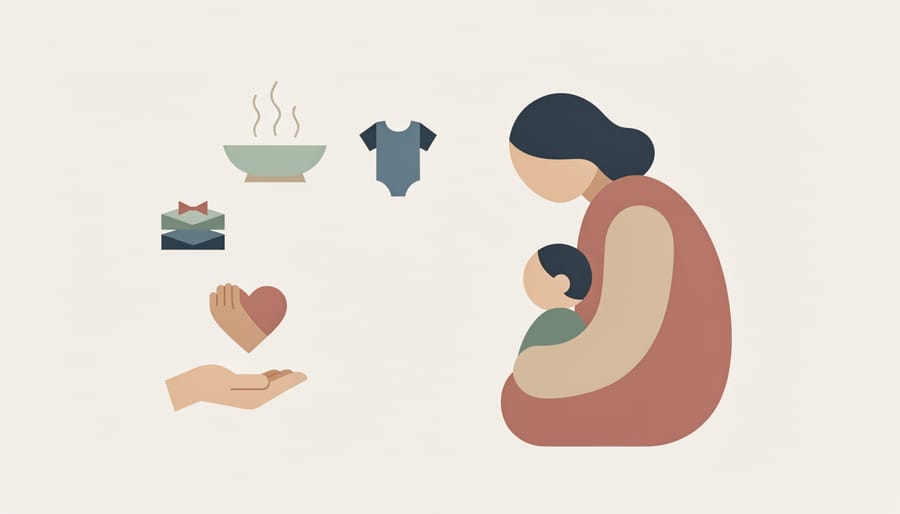
You don’t need to have everything figured out to be a community mom. You just need to show up.
Some of the most powerful support comes from the mom who’s still in pajamas at noon, texting to say “me too” when you admit you’re struggling. The one who sees you at the park and doesn’t pretend everything’s perfect. The truth is, being a community mom isn’t about having it all together, it’s about being willing to reach out, even when your own life feels messy.
Start small. These gestures make a bigger impact than you might think:
- Text a mom who seems isolated and invite her for a walk or coffee
- Offer to hold someone’s baby while they eat, shower, or just breathe
- Share hand-me-downs without expecting anything in return
- Drop off a meal or coffee on a friend’s doorstep after a rough night
- Say “that sounds really hard” instead of trying to fix everything
- Invite another mom to join you at something you’re already doing
When another mom shares a struggle, whether it’s about sleep deprivation, feeling touched out, or even something lighter like finding baby name inspiration your willingness to listen without judgment matters more than having the perfect advice.
Notice the mom standing alone at pickup. Compliment the tired-looking woman in the grocery store with the screaming toddler. Ask “How are you really doing?” and wait for the real answer. These small acts of noticing create the kind of connection that transforms isolation into community.
You’re already enough to support someone else. Your honesty about your own hard days, your willingness to be present without fixing, your simple “I see you”, that’s what makes a community mom. And chances are, there’s a mother near you right now who desperately needs exactly what you have to offer.
Navigating Different Parenting Styles Within Your Community
You’ll find community moms who co-sleep while you sleep-train, who breastfeed past toddlerhood while you chose formula from day one, who follow strict schedules while you wing every day. And here’s the truth: those differences don’t have to create distance.
The strongest mother communities aren’t built on identical parenting philosophies. They’re built on mutual respect and shared humanity. When a community mom parents differently than you, it’s not a rejection of your choices or a silent judgment. It’s simply her doing what works for her family, just as you’re doing what works for yours.
Focus on the values beneath the methods. You might disagree about screen time limits, but you both prioritize your children’s wellbeing. She might have different discipline approaches, but you both want to raise kind humans. Those shared foundations matter more than matching tactics.
When conversations touch on areas where you parent differently, you don’t need to explain or defend your choices. A simple “That’s so interesting. What made you decide to try that approach?” keeps connection open without compromising your own path. Listen to understand her experience, not to evaluate her methods against yours.
The beauty of diverse community moms is the perspective they offer. Watching different approaches work for different families reminds us there’s rarely one right way. Your attachment-parenting friend and your schedule-focused neighbor can both raise thriving children. That reality takes pressure off all of us.
Set boundaries where needed, but lead with curiosity over judgment. Your community grows stronger when it has room for different voices.
Community moms aren’t a bonus feature of motherhood. They’re foundational. They’re the difference between white-knuckling through hard days and actually having someone to text at 2am who gets it. Between feeling like you’re failing alone and realizing you’re figuring it out together.
This week, take one small step. Send that text. Show up to that playdate. Reach out to the mom who looks as tired as you feel. Or simply respond when someone reaches out to you.
Motherhood was designed for community, not isolation. Asking for support isn’t weakness. It’s wisdom. And the village you’re looking for might just be waiting for you to say hello first.